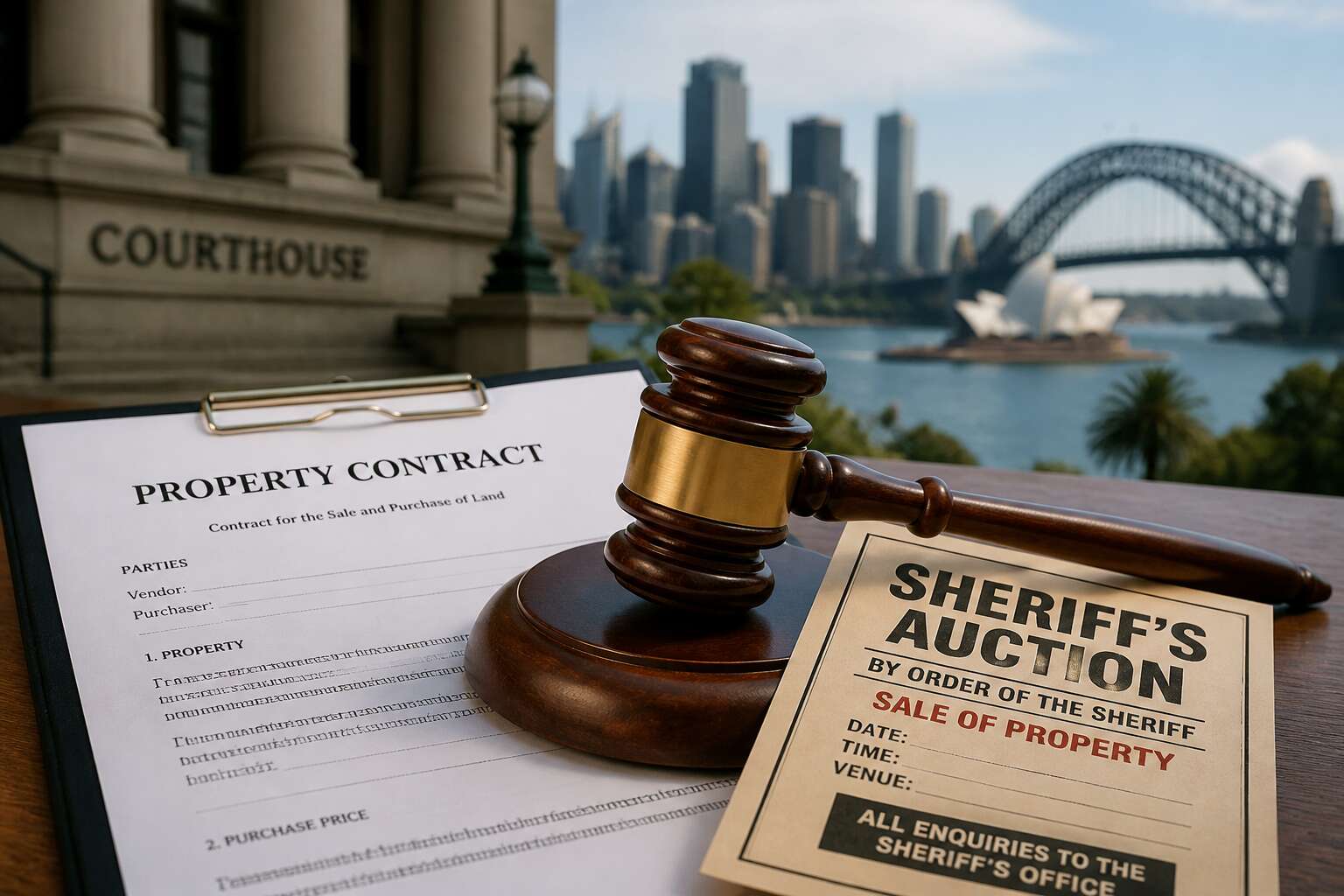
Understanding Court-Ordered Property Sales in New South Wales
The Role of the Sheriff in Enforcing Court Judgments
The sheriff in New South Wales serves as the court’s enforcement arm, converting paper judgments into tangible outcomes. When a debtor ignores a court order, the sheriff enters the picture with statutory power to seize and sell real property. This authority stems from the Civil Procedure Act.
A nsw sheriff auction typically begins after a writ of execution is filed. The sheriff takes control of the property, commissions a formal valuation, and advertises the sale date in the NSW Government Gazette. Unlike private sales, these auctions carry the weight of court authority.
The sheriff’s core duties include:
– Serving enforcement documents on the debtor
– Securing and managing the seized property
– Conducting the public auction and transferring title
Every step follows a documented legal trail, protecting both creditor and debtor throughout the process.
How a Property Becomes Subject to a Sheriff’s Sale
A single court judgment rarely frightens a determined debtor. The real threat arrives later, when the creditor files a writ for levy of property. That document changes everything! The sheriff gains authority to seize the real estate and begin the forced sale process.
Make no mistake, the route to an nsw sheriff auction is procedural and unforgiving. A sheriff’s officer attends the property and posts a seizure notice. The writ is then recorded against the title. A registered valuer steps in. Their assessment sets the reserve price, and the debtor receives formal notification of the impending sale.
Certain conditions accelerate this timeline:
- The debtor refuses access to the property
- The creditor provides evidence of asset dissipation
- The property sits vacant for extended periods
Once the Government Gazette publishes the sale date, the nsw sheriff auction becomes a matter of public record. From that moment, the property’s fate rests with the highest bidder.
Key Differences Between an Enforcement Auction and a Standard Real Estate Auction
A standard auction rewards the seller’s patience. They can pass in a bid and wait for a better offer. A court ordered sale offers no such luxury. The reserve price is set by a registered valuer, and the sheriff has no mandate to haggle. This single difference defines the nsw sheriff auction experience.
The rules of engagement also diverge sharply. In a typical real estate auction, terms are often flexible. In an enforcement sale, the terms are rigid, period! The buyer faces strict statutory deadlines.
- Deposits are due immediately.
- Settlement periods are compressed.
- Court approval is required afterward.
For anyone watching, the nsw sheriff auction is a strictly procedural event. Unlike a private auction, there is no room for emotional bidding. The price is fixed, and the process is final.
Locating Upcoming Enforcement Auctions Across NSW
Official Sheriff Office Website and Public Notices
Every week, someone discovers their dream bargain carries a sheriff’s stamp. Locating an nsw sheriff auction requires patience and a working bookmark for the official Sheriff Office website. That portal lists upcoming enforcement auctions across NSW, complete with dates, property addresses, and the occasional cryptic note about title defects.
Public notices remain part of the ritual. They appear in local newspapers and on physical noticeboards, which feels obsolete until you miss an online update. A typical notice includes:
– The registered owner’s name
– The property’s legal description
– The scheduled auction time and location
– The judgment amount that triggered the sale
These notices are the backup system for when the website glitches or your signal dies. Keep checking both sources. Auctions get postponed, withdrawn, or moved to a car park on short notice. The official record is the only truth you can trust, and even then, bring a backup plan.
State Legal Gazette and Classified Listings
Nobody reads the NSW State Legal Gazette for fun. It carries the same thrill as a tax form. Yet for anyone chasing an nsw sheriff auction, that publication is indispensable. It lists upcoming enforcement auctions with a degree of formality that borders on solemn. Classified listings, by comparison, are a ragged patchwork of half sentences and bold type.
The gazette tells you the legal description. The classifieds tell you the auctioneer’s phone number and their mood. Both matter. The gazette updates once a week. The classifieds update whenever the wind shifts. Scan both, then confirm on the official website. One will inevitably mention a postponement the other forgets. That is where the real work begins.
Appointed Real Estate Agents and Auction Houses
Last year, over 340 properties went under the hammer through enforced sales in New South Wales. The professionals making that happen rarely advertise on billboards. Appointed real estate agents and auction houses operate through a quieter network.
These agents receive instructions directly from the Sheriff’s Officer. Their job is to prepare the property for sale, manage open homes, and handle the bidding process. Auction houses bring the specialised skill of conducting the sale itself.
Finding the right listings means checking the databases these intermediaries use. Several state portals aggregate notices from appointed agents. The Australian Property Monitors platform and individual agency websites frequently publish these details before any physical notice appears.
When you do locate a listing for an nsw sheriff auction, evaluate these points:
- The agency’s prior history with enforcement sales
- Whether the auction house holds a current licence
- The published terms of deposit and settlement
Established auction houses like Ray White Commercial and Colliers occasionally handle these matters, though smaller regional firms also pick up significant work. Each nsw sheriff auction has its own rhythm. The auctioneer’s demeanour, the legal requirements, and the property’s condition all shape the outcome.
Registration processes vary between houses, but all require identification and proof of funds. Some mandate a deposit on the day. Experience matters here. A catalogue for an nsw sheriff auction prepared through a professional agency reads clearer, offers better photographs, and discloses title issues upfront. The real preparation begins long before the virtual gavel falls.
Online Auction Portals and Data-Rich Property Platforms
Scrolling through enforcement auction listings online reveals a less publicised marketplace. The best auction portals compile these properties in real time, pulling data directly from court records and official notices. I have spent hours comparing platforms, and the differences are striking.
What separates the useful portals from the rest is the quality of their metadata. For a serious buyer, a strong listing should include:
- Historical sale prices for comparable enforced sales
- Title search links embedded in each property record
- Days on market data for similar auction outcomes
Data-rich property platforms now layer zoning information, flood risk maps, and outstanding council rates against each upcoming sale date. That combination changes how a buyer evaluates financial exposure before bidding at an nsw sheriff auction.
The Bidding Process at a Sheriff-Authorized Auction
Registration Requirements and Bidder Identification
At an nsw sheriff auction, the bidding process starts before the auctioneer even clears their throat. Registration typically opens thirty minutes prior, and the paperwork demands precision. You will need government-issued identification, proof of funds, and a willingness to fill out forms that feel deliberately repetitive.
Bidder identification is not ceremonial. The sheriff’s office checks your credentials against legal requirements, and some venues require a refundable deposit in bank cheque form. Once cleared, you receive a numbered paddle.
- Bring original ID, not photocopies.
- Confirm the deposit amount with the sheriff’s office beforehand.
- Know the bidding increments before raising your hand.
Your paddle number links every bid to your identity, so there is no anonymous bidding. The process moves quickly, and hesitation costs you the property.
Performing a Title Search and Legal Due Diligence
At an nsw sheriff auction, the auctioneer’s chant is a metronome of consequence. The entire sale of a property can conclude in under ninety seconds! That brevity is why the serious bidder arrives armed with weeks of preparation. Title search and legal due diligence are not afterthoughts. They are the foundation of a bid you can live with.
Consider what a title search reveals:
– Registered easements that affect access
– Caveats that could delay settlement
– Outstanding charges that transfer with ownership
The sheriff offers no warranty of title. Once the hammer falls, the risk is yours. I have watched seasoned investors sit on their hands, not because they lacked funds, but because the title search exposed a right of way that would swallow the backyard. At an nsw sheriff auction, knowledge is the only margin you control.
Inspecting the Property: Access Rules and Limitations
Before the first bid at an nsw sheriff auction, you must reconcile yourself to the physical reality of the property. The sheriff does not offer open house viewings. Access is procedural, often limited to a curbside glance or a scheduled exterior inspection. That constraint reshapes how you evaluate value. You are bidding on paper, on photographs, and on whatever the register tells you. In my experience, the investors who win smart have already walked the neighborhood, peered through fences, and spoken to neighbours.
What you can and cannot do:
– You may inspect the exterior from public land
– You cannot enter the premises without court approval or owner permission
– You may attend the auction and observe prior to bidding
That list matters. Interior damage, illegal structures, and tenancy issues may remain invisible until settlement. At an nsw sheriff auction, bidding is brisk. Deposits are demanded immediately, often ten percent, and the contract is signed on the spot. It is a brisk, unforgiving rhythm.
Understanding Bid Increments and Auctioneer Discretion
The gavel at an nsw sheriff auction does not wait for hesitation. In my experience, bidding increments are set by the auctioneer, not the bidder. A raise of five thousand might be accepted, then suddenly that same auctioneer demands ten thousand for the next advance. That discretion is legal and it unsettles inexperienced buyers.
You watch the room. You gauge who is still breathing. The auctioneer can slow the pace, call for a fresh bidder, or close the lot without warning. The cadence shifts with each raise.
The increments follow patterns, sometimes:
- Opening bids at the sheriff’s minimum valuation
- Standard raises of five to ten thousand
- Final jumps that exceed the pattern entirely
Your strategy must account for that unpredictability. The nsw sheriff auction rewards bidders who force the auctioneer to chase their numbers, never the reverse.
Deposit Terms, Payment Methods, and Settlement Timeline
Once the hammer falls at an nsw sheriff auction, the room shifts from theatre to accounting. The winning bidder does not walk out with keys and a handshake. They walk to the clerk’s table, where the deposit demand becomes immediate. In most cases, you must produce a bank cheque or electronic transfer before the auctioneer leaves the podium. Cash is rarely accepted, and personal cheques are treated with suspicion.
Payment terms follow a strict sequence:
- A deposit, often ten percent of the purchase price, due on the day.
- The balance payable within twenty-one to thirty days, depending on the conditions of sale.
- A settlement date set by the sheriff’s office, not by mutual convenience.
Failure to meet that timeline can forfeit the deposit and expose the buyer to legal action. The nsw sheriff auction process favours the prepared, not the hopeful.
Evaluating the Risks and Rewards of a Sheriff Sale
The Allure of Below-Market Acquisition Prices
Snagging a property below market value is the dream behind every nsw sheriff auction. A 2024 industry review suggested that successful bidders secure assets at 15% to 40% cheaper than comparable sales. That allure fills the registration room, but the rewards come with a list of risks.
You are not buying a standard listing. The property sells ‘as is’, with no warranties and no cooling off period. The previous owner may still be living there, and eviction proceedings drain your budget. Attics hide structural decay or illegal renovations.
- Confirm the settlement period stated in the auction terms.
- Review outstanding council rates attached to the title.
- Identify whether the property is vacant before you commit.
Each factor shifts the true cost. The nsw sheriff auction process allows no internal inspections, so due diligence happens from the street and through public records. One bidder secures a bargain; another becomes the reluctant landlord of a hostile tenant.
Hidden Liens, Mortgages, and the Extent of Court Sale Powers
Behind every nsw sheriff auction is a court order that seizes the property and forces a sale, yet that power has limits. The sheriff can override the owner’s resistance, but registered mortgages often survive the sale. The winning bidder may take title subject to those loans, absorbing the previous owner’s financial obligations.
Hidden liens add a second layer of risk. Council rates, water charges, and strata levies can attach to the title and follow the property. Some appear in a title search, but others surface only after settlement, when the new owner receives the bill.
The reward still exists: a purchase price at a discount. But the final margin depends entirely on what the court sale powers leave behind.
Vacant Possession vs. Tenants with Existing Rights
An empty house looks like a win. But in a nsw sheriff auction, vacancy can be a mirage. The sheriff may sell the property free of the owner’s possession, yet existing tenancy agreements often survive. If a tenant holds a registered lease, the buyer steps into the landlord’s role. Rent rolls, bond obligations, and repair duties transfer without negotiation. That changes the reward calculation.
A truly vacant property offers immediate control. No eviction timeline, no holdover disputes. But genuine vacancy is rare. Most occupied properties fall under residential tenancy laws that favor the occupant. The bidder must weigh the discount against the cost of waiting out a lease. Sometimes the numbers still work. Sometimes they do not.
Before bidding, verify who holds the keys. Check the lease term, the bond status, and whether the tenant pays below market rent. Those details decide if the property is an opportunity or an obligation. The nsw sheriff auction price is only the starting point. The real cost appears later, in lost months or legal fees. That is the quiet risk behind every seemingly cheap lot.
Property Condition: Sold ‘As Is’ With No Guarantees
Buying at an nsw sheriff auction means accepting the property exactly as it stands. There is no vendor warranty, no cooling-off period, and no recourse for defects discovered after settlement. The sheriff executes the court’s order; they do not inspect for rising damp, termite damage, or illegal renovations. This is the core trade-off: a lower entry price in exchange for complete uncertainty about what lies underneath.
Rewards exist for those who can tolerate the gamble. A property sold as is often attracts fewer bidders. That translates into a cheaper acquisition for the investor who budgets for worst-case scenarios. Yet the risks deserve equal weight.
- Structural faults may void insurance options.
- Outstanding council orders for demolition remain with the land.
- Environmental contamination could exceed remediation costs.
Every nsw sheriff auction requires a pre-bid mindset built on maximum loss, not potential gain. The final price reflects only the bidding, not the actual cost of repairs.
Funding Hurdles and the Need for Pre-Approved Finance
Most bidders at an nsw sheriff auction do not fail because of the bidding. They fail because their finance collapses before settlement. A sheriff sale does not pause for a bank’s slow approval process. The deposit is due immediately, and the balance follows on a strict timeline.
Pre-approved finance is not a formality. It is the single barrier between a shrewd purchase and a forfeited deposit. Lenders treat nsw sheriff auction properties with caution, especially when the title carries baggage. You need a funder who comprehends the enforcement process and confirms the loan before you raise your paddle.
Evaluate the reward with clear numbers:
- Cost of borrowing
- Immediate repair budget
- Holding costs while the title transfers
The true risk is not the property. It is the gap between your assumptions and your cash position.
Legal Recourse Options for Disputes or Irregularities
Every nsw sheriff auction carries legal exposure. The reward is tangible, a property secured below market value. The risk lives in the process itself. Irregularities do occur, from improper notice to misapplied deposits. When the sale feels wrong, legal recourse exists but time moves against you.
I have weighed the cost of a challenge against the price of silence. The court does not look kindly on speculative objections. You need evidence, not unease.
Consider the grounds for dispute:
- Flag the irregularity immediately.
- Preserve every document.
- Seek an urgent injunction.
A nsw sheriff auction offers redress, but only to those who act before settlement dissolves their options. That is the arithmetic of the sheriff’s chamber. Act on the irregularity before the record closes!
Post-Auction Steps for the Successful Bidder
Receiving the Certificate of Sale and Transfer Documentation
The hammer falls and a strange silence follows. You have won the bidding, but ownership remains distant. In an nsw sheriff auction, the Certificate of Sale is your only proof of entitlement, yet it is not a title deed. It merely records the sheriff’s authority to transfer the property to you once all conditions are met.
The transfer documentation arrives separately, often through the sheriff’s office or the court registry. This paperwork demands your immediate attention. The settlement clock is already running, and bureaucratic delays will not pause it.
- Verify that the property description matches the auction catalogue exactly.
- Check the certificate for any caveats or notations regarding outstanding dues.
- Confirm the names of all registered owners before lodging the transfer.
Any discrepancy in these documents can stall the registration process. The sheriff has fulfilled their duty the moment the sale is confirmed. From that point, the burden of completing the legal transfer rests entirely on your shoulders.
Settlement Procedures and Payment of the Balance
The hammer falls, and the real work begins. In an nsw sheriff auction, the balance must be settled within the strict timeline set by the court. Electronic transfers work, but funds must clear before the sheriff issues the final receipt. Bank cheques remain the safest.
Before transferring the remaining amount, confirm the exact figure with the sheriff’s office. The balance often differs from the final bid due to accrued interest, auction fees, or adjustments for rates and levies. I have seen overpayment trigger a refund process that takes weeks.
- Request a final settlement statement in writing.
- Arrange payment via bank cheque or confirmed transfer.
- Obtain a stamped receipt from the sheriff.
Failure to pay by the deadline carries serious consequences. In an nsw sheriff auction, the sheriff may rescind the sale, forfeit your deposit, and re-auction the property. Banking delays earn no leniency. Pay early, not on the final day!
Stamp Duty, Registration Fees, and Other Government Charges
Winning a nsw sheriff auction is only the beginning. The transfer of title triggers a fresh set of government obligations, and they arrive quickly. Stamp duty, calculated on the purchase price, must be lodged with Revenue NSW within three months of the auction date. Late lodgement attracts penalties and interest.
Registration fees also apply when the new title is lodged with Land Registry Services. The sheriff does not manage these payments. You handle them directly! The exact fees depend on the property value and whether you qualify for concessions.
- Request the exact duty assessment before settlement.
- Budget for conveyancer fees alongside government charges.
- Keep proof of payment for every levy.
The final receipt from the sheriff confirms the transaction, but it does not clear your statutory obligations. A nsw sheriff auction concludes only when the title transfer is registered and all charges are settled.
Taking Possession: Evictions, Tenancy Termination, and Handover
Winning the bid is the start, but physical possession is the final step. A nsw sheriff auction does not guarantee empty keys at settlement. If a tenant remains, their occupancy rights persist until formally terminated under the Residential Tenancies Act.
You must serve the correct notice, then apply to the NSW Civil and Administrative Tribunal for an eviction order. The sheriff executes that order, not private security. The timeline depends on tribunal hearing dates and sheriff availability, so expect several weeks between settlement and actual possession.
- Inspect the property immediately after settlement to document its condition.
- Serve termination notices using the prescribed legal format.
- Arrange a formal handover once vacant possession is confirmed.
Only when the locks are changed is control truly yours. The sale concludes with registered title and physical possession combined, and neither can be neglected.




0 Comments